
The shift happening in your industry
These numbers explain why GEO SEO matters for your sector right now.
of B2B software buyers say they used an AI assistant to research tools during their last software purchase decision
Source: Gartner B2B Buying Behaviour Survey, 2025
of SaaS comparison searches now trigger an AI Overview on Google before organic results appear
Source: Semrush AI Overviews Impact Report, Q1 2026
higher trial signup rate when a SaaS brand is cited in an AI assistant recommendation vs. a paid search click
Source: OpenView SaaS Benchmark Report, 2025
What’s changing for you
The specific consequences of the AI search shift for this industry — not generic GEO copy.
The software evaluation journey has compressed — buyers ask AI assistants for a shortlist of tools matching their requirements and go directly to free trial signup, bypassing the traditional 'search → review site → feature comparison → demo request' funnel.
G2, Capterra, and review aggregators still matter — but AI engines increasingly synthesise their content and deliver a direct shortlist, meaning your reviews and feature descriptions need to be AI-parseable, not just human-readable.
SaaS companies that rely entirely on paid search and SEO-optimised blog content are discovering blind spots: their organic rankings are strong, but they're absent from the AI-generated tool comparisons and shortlists that now influence a majority of mid-market and enterprise software decisions.
Free tool
Free GEO SEO analyser for Technology & SaaS
Run a free AI & SEO site audit on your technology & saas site. See what blocks ChatGPT, Gemini, and Google from citing you — then get a prioritised fix list.
How GEO SEO Lab helps
The tools built for this industry — each with a dedicated page showing exactly how they work.
average GEO score improvement for SaaS clients after implementing the full fix list
“We had a strong organic search presence but were completely invisible in AI tool comparisons. GEO SEO Lab identified the schema gaps and content structure issues in one audit. Our AI citation rate for core product queries doubled within 6 weeks.”
Arjun Sharma
Head of Growth, Stackify
Related Guides
Deeper context from the GEO SEO Lab blog.
Google's AI Content Guidance: What Website Owners Need to Change Right Now
Google's AI Content Guidance: What Website Owners Need to Change Right NowPublication: GEO SEO LabCategory: SEO Strategy / Content Governance / Google...
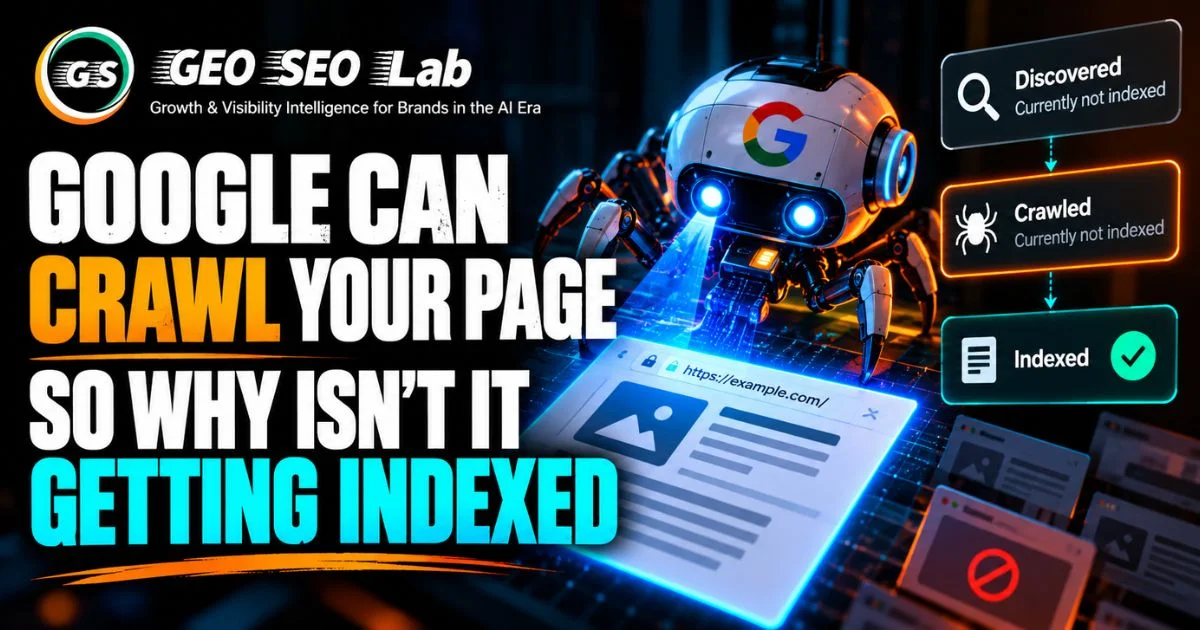
Google Can Crawl Your Page: So Why Isn't It Getting Indexed?
Google Can Crawl Your Page: So Why Isn't It Getting Indexed?Imagine pouring weeks of painstaking effort into a comprehensive, deeply researched articl...
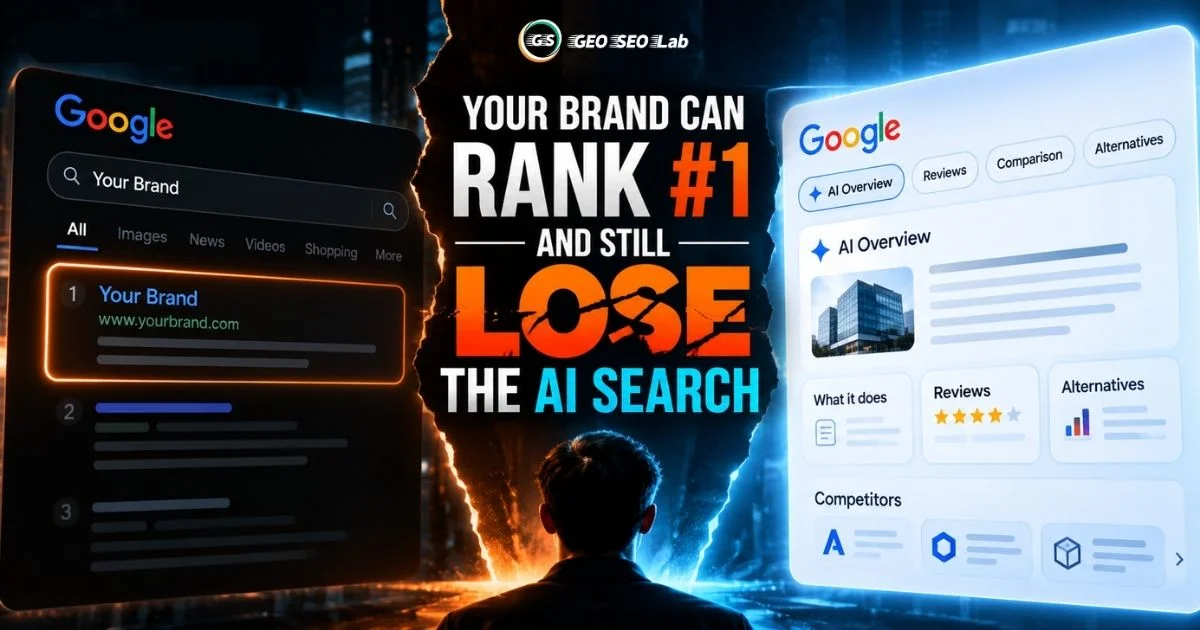
Your Brand Can Rank #1 and Still Lose the AI Search
Your Brand Can Rank #1 and Still Lose the AI SearchGoogle AI Overviews Are Changing Brand Search, and What It Means for SEOEditorial DisclosureThis ar...
Frequently Asked Questions
Specific questions for your industry — no jargon walls.
Yes. GEO SEO Lab's free GEO SEO analyser audits SoftwareApplication schema, FAQ structure, AI crawler access, and answer-readiness on your product site — no credit card required.
Traditional search ranking and AI citation eligibility use different signals. AI engines need structured software data (SoftwareApplication schema), direct answer text explaining what your tool does and who it's for, and consistent feature descriptions across your website, G2, Capterra, and other review platforms. Many well-ranked SaaS sites lack these signals entirely.
Yes — but not automatically. AI engines crawl review aggregators and extract product information, but only where the structured data is well-formed. Your G2 and Capterra profiles need to use consistent product names, categories, and feature descriptions that match your own website — mismatches create entity ambiguity that reduces AI citation likelihood.
SoftwareApplication schema is the most important — it gives AI engines a structured, unambiguous description of your tool: category, operating system, pricing model, and description. FAQPage schema on your features and pricing pages is the second priority, enabling direct FAQ citations in AI answers.
AI engines compile best-of answers from review aggregator data, editorial content, and your own website's answer-ready content. Content Studio helps you generate structured comparison and use-case pages that are explicitly formatted for AI extraction. The AI Visibility Tracker shows you which specific queries you're missing and what competitors are cited for them.
Yes. Perplexity is monitored alongside ChatGPT, Gemini, Claude, and 16+ other AI engines. For technical SaaS audiences, Perplexity and Claude are often higher intent than ChatGPT for tool research queries — the AI Visibility Tracker breaks down your citation rate by engine.
It helps, but it's not sufficient on its own. AI engines prefer content that directly answers a question (not content optimised around a keyword) and content backed by structured markup. The Content Studio helps you restructure existing blog content to be AI-citation-ready without rewriting it from scratch.
Still have questions? Talk to our team